
Start with the essentials
Dong Ding is associated with Lugu in Nantou, Taiwan. Repeated rolling creates semi-ball leaves, while material, leaf working, drying and roasting jointly shape floral-fruity and roasted aromas. Products vary in style.
This article retains the complete process from fresh leaf to brewing, moving from observations to craft and then distinguishing direct sample findings, general chemistry and practical advice.
Three key points
- Ball rolling shapes the leafTightening, kneading, loosening and reheating work together; cycle counts vary by batch.
- Roasting changes aroma mixturesExperiments support pyrazine contributions to caramel aroma in studied samples, without universal concentration multipliers.
- Adjust brewing variables together95–100 °C is a trial starting point for roasted tea; lower temperatures are also usable, and infusion counts depend on sample and preference.
What to notice when tasting
Compare 90 °C and near-boiling water using the same tea and recorded dose, volume and time. Observe aroma, bitterness and astringency, then adjust timing toward similar strength to find your preferred balance.
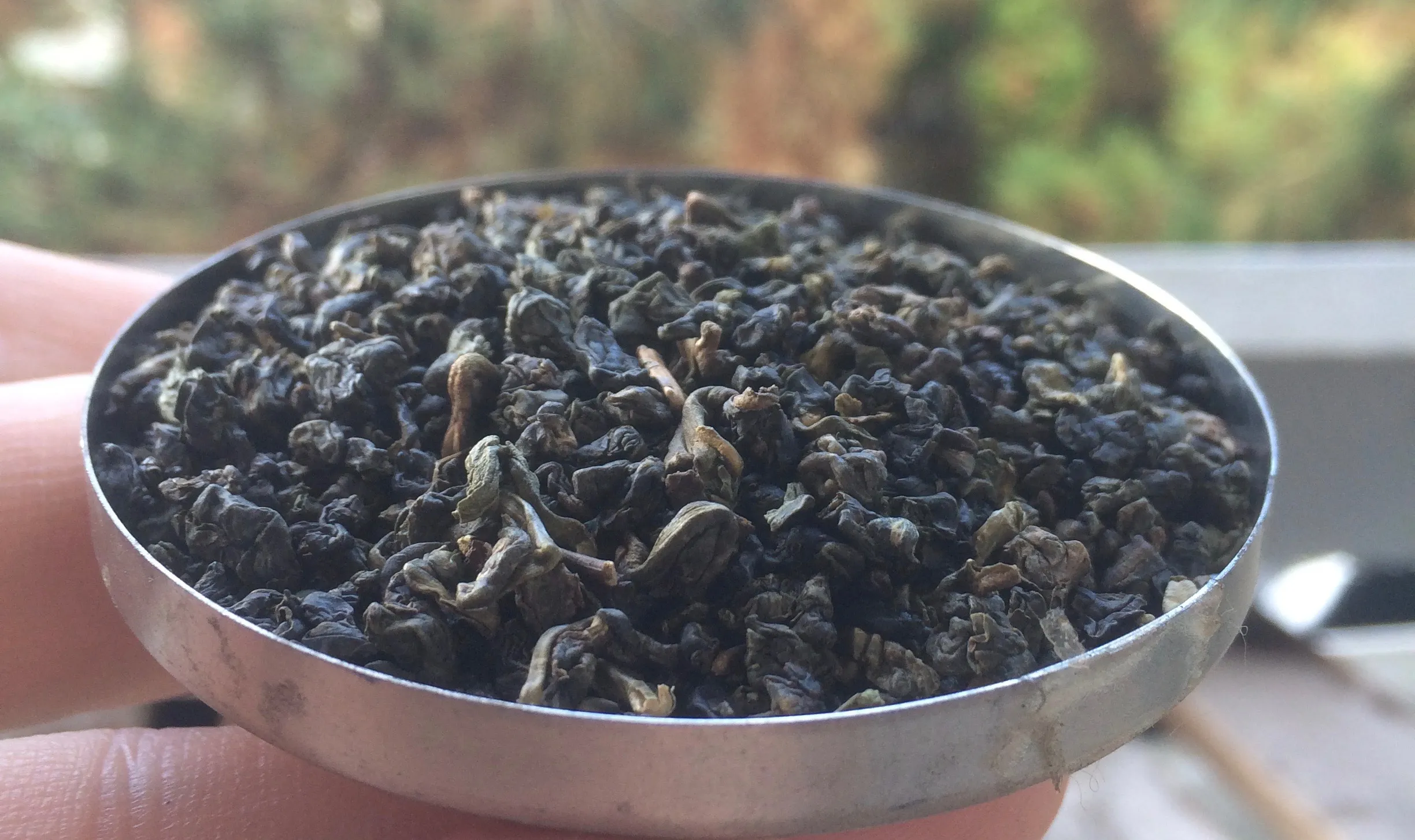
Dong Ding oolong is closely associated with the tea-making traditions of Lugu, Nantou, Taiwan. Start with three observations: tightly rolled semi-ball leaves, gradual opening during brewing, and a combination of floral-fruity and roasted aromas. Traditional styles often use Qingxin Oolong material (see The Code of Tea Cultivars), with withering, leaf working, fixation, rolling, ball shaping and drying followed by roasting suited to the desired flavour. Oxidation, heat sources and firing schedules vary between producers (see Mechanical Stress Signaling in Oolong Shaking and The Chemistry of Roasting: Maillard & Caramelization)[3][8]. This article connects those observations with the craft, then explains what aroma and taste studies actually establish before offering adjustable brewing starting points.
1. Recognising the Tea: Lugu, Qingxin and the Cup
1.1 Appearance, aroma and liquor
The geographic background in Dong Ding research points to Lugu in Nantou. Growing conditions, harvest and manufacture work together; altitude, mist or soil alone cannot explain the finished flavour[3].
- Dry leaves: Semi-ball form is a clue to ball rolling. Pellet size and tightness depend on material and manufacture; tightness does not guarantee persistence, and brown colour does not identify charcoal firing.
- Aroma: Floral, ripe-fruit, nutty and caramel associations can coexist. Concentration, odour thresholds and mixture effects influence perception; detecting a compound does not establish that it dominates the aroma[3].
- Liquor: Strength, bitterness, astringency, sweetness and aftertaste depend partly on leaf-to-water ratio and steeping time. Golden to orange liquor is descriptive, rather than independent proof of origin, age or grade.
1.2 How Qingxin material works with processing
Qingxin is important to the traditional style, but a cultivar name cannot replace batch measurements. Leaf maturity, moisture, season and field conditions affect later processing.
- Appropriate maturity helps leaf working and shaping: Producers use leaf opening, texture and weather to guide withering, movement and rest. Very tender or coarse material needs different handling[8].
- Pliable leaves support ball rolling: Water loss, heating and rolling change flexibility. Repeated rolling gradually tightens the leaf; tissue disruption and expressed juices participate, but one pectin “adhesive” does not explain the whole process[8].
- Aroma develops across stages: Existing compounds and precursors change during withering, leaf working, drying and firing. Glycoside hydrolysis, lipid-derived reactions and thermal reactions are general tea-aroma mechanisms, not proof that every precursor is more abundant in Qingxin[6].
2. From Withering to Semi-Ball Leaves
The full manufacturing sequence remains useful, but a single set of temperatures and minutes is not a universal recipe. Product requirements and processing textbooks have different roles: the former apply to their stated product scope, while the latter help explain operations[1][8].
2.1 Withering and leaf working
- Watch leaves and environment: Spread fresh leaves gradually lose moisture and become less rigid. Sunlight, airflow, layer thickness and humidity change the rate. Strong sun may require shade or indoor handling; elapsed minutes alone cannot establish completion[8].
- Alternate movement with rest: Movement damages parts of the leaf, including margins, increasing contact between polyphenols and oxidative enzymes. During rest, water continues to redistribute while aroma and colour develop. Fading grassy notes, emerging floral-fruit impressions and changing margins are practical observations[6][8].
- Treat “fermentation degree” as contextual language: Oolong’s partial fermentation chiefly refers to enzymatic oxidation. Without a stated measurement definition, a percentage is not a fixed proportion of all compounds converted, and the fraction of red leaf margin is not a universal chemical index.
2.2 Fixation, rolling and initial drying
Heating substantially reduces the activity of relevant enzymes, including polyphenol oxidase. Its effect depends on leaf temperature, duration, load and handling. Equipment settings, pan surface and leaf temperatures differ; crossing one temperature cannot be assumed to eliminate all enzyme activity[8].
- Uniform heating and moisture removal matter together: Tossing and turning manage both heat and steam. Insufficient heating, local scorching and prolonged trapped moisture can affect colour and odour.
- Prepare pliable material for shaping: Initial rolling curls leaves and mechanically affects tissue. Drying and conditioning then adjust moisture for subsequent ball rolling. Describing pliability does not require assuming a uniform pectin “melting” event[8].
2.3 Cloth-bag rolling: how the shape forms
The visible result is a progression from loose leaf cords to tight pellets. Bag tightening, kneading, loosening and reheating work repeatedly together[8].
- Bundle and tighten: Material at suitable moisture and temperature is enclosed in cloth. Manual and mechanical methods impose different forces.
- Knead and turn: Compression, friction and bending gradually curl the leaves. These observed actions explain shaping without unsupported numerical claims about shear stress.
- Loosen, release heat and repeat: Open the cloth, separate clumps and adjust reheating and further rolling to the leaf state. Cycle count depends on material, equipment, load and target shape; 15–30 cycles is not an identity criterion.
- Relate form to extraction carefully: Tightness affects wetting and opening; tissue disruption can influence release. Neither proves that tighter pellets always last longer, and an unmeasured cell-damage percentage should not be displayed as experimental data.
From loose leaf to semi-ball
Three stages; watch the cloth bag in 03.
Thin layers wither and rest
- Thin layer in the sun
- Indoors: turn, then rest
- Rubbed leaf margins redden locally
- Grassy notes turn floral
Leaves soften as water evens out; judge the leaf, not the clock.
Conditions, techniques & sources
- Temperature
- Adjust to sunlight, airflow and leaf temperature
- Timing
- Movement and rest follow leaf state
- Moisture state
- Progressive water loss
Spread leaves and adapt sun and indoor handling to conditions, alternating movement and rest.
Moisture redistribution, tissue damage and local oxidation work together; mechanisms do not establish universal concentration changes.
Use leaf state and material rather than a fixed duration or margin percentage.
Sources serve different roles: textbooks explain operations; Dong Ding experiments address tested samples; Qingxin studies compare roasting treatments. See the article references.
No concentrations or sweetness indices are implied; conditions vary with leaf and equipment.
3. From Roasted Aroma to Chemistry
Roasting changes floral-fruity aromas, roasted notes and taste balance. Outcomes depend on material, moisture, temperature and time. Heavier firing can also reduce floral notes or produce harshness; more heat is not a one-way quality improvement[4].
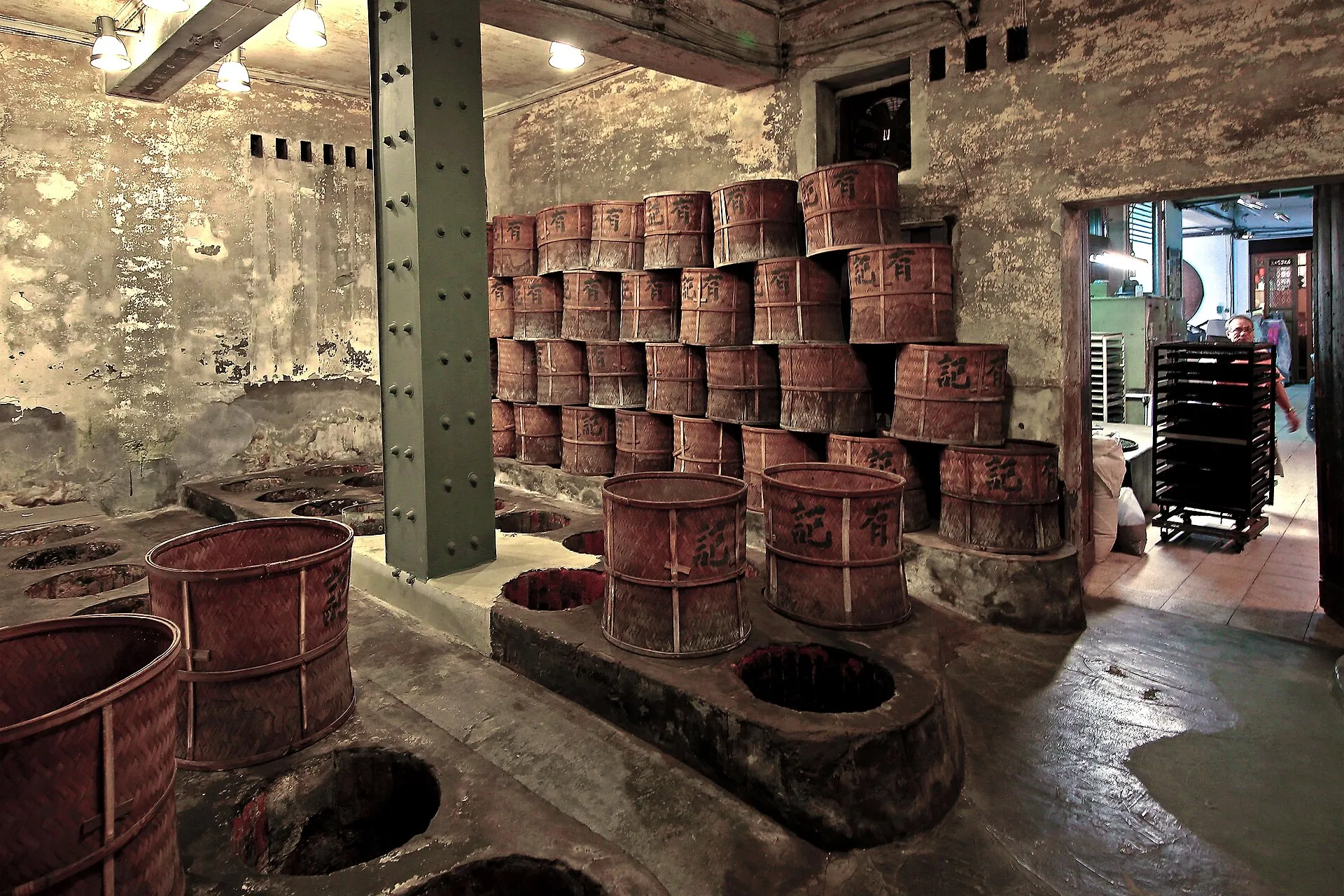
3.1 Charcoal and electric firing: how heat reaches the leaves
Traditional charcoal firing manages ash cover, tea-layer thickness, turning and cooling. Longan charcoal is one traditional heat source; the cited studies do not establish it as the sole route to Dong Ding flavour.
- Heat does not automatically travel from the core outward: Radiation, convection and conduction may all participate in either charcoal or electric equipment. Heat arriving at the surface is distributed through the tea layer and leaf by heat and mass transfer. “Far-infrared waves penetrate the core and roast outward” is too simple an explanation.
- Heating and resting do different jobs: Heating reduces moisture and changes constituents; cooling permits heat loss and moisture redistribution. Measurements need a stated location and treatment, rather than equating a basket reading with every leaf’s temperature.
- Use sensory observations with production records: Consider aroma balance, smoky or scorched odours and taste. Colour, white surface specks or throat sensation alone cannot identify the heat source or diagnose a particular chemical reaction.
3.2 Direct evidence for aroma contributors in Dong Ding
A 2023 Foods study combined aroma analysis, quantification, recombination and omission experiments. Its sample and grade comparisons are not a universal roasting experiment[3].
- Three pyrazines contributed to caramel aroma in the study: 2-Ethyl-5-methylpyrazine, 2-ethyl-3,5-dimethylpyrazine and 2,3-diethyl-5-methylpyrazine received sensory support. Linalool, geraniol, nerolidol and other compounds contributed floral-fruity notes. The overall aroma is a mixture[3].
- Maillard chemistry supplies general background: Amino compounds and reducing sugars can react during heating to form some nitrogen heterocycles and other aroma compounds. Temperature, time, water activity and substrates influence the reactions. A tea-aroma review supports this explanation without proving the complete pathway in every Dong Ding batch[6].
- Use traceable measurements: Unsupported “4.8–8.2-fold” increases are omitted. An unroasted-versus-roasted comparison needs sample identity, treatment, quantification, replicates and statistical results.
Roast in the basket, open in the cup
Heat goes in; then water opens the pellet.
Staged firing: roast and flower
- Banked charcoal or electric heat
- Thin layer, turned in stages
- Heat by radiation and convection
- Pyrazines add caramel notes
Roasting adds caramel pyrazines; too much trades flowers for bitterness.
Conditions, techniques & sources
- Temperature
- Record sensor location, tea layer and treatment
- Timing
- Adjust to material, moisture and intended flavour
- Moisture state
- Confirm finished moisture by measurement
Use charcoal or electric equipment while controlling temperature, duration, loading, turning and rests.
Dong Ding research supports three pyrazine contributors to caramel aroma. Qingxin roasting comparisons do not imply universal fold changes.
Radiation, convection and conduction distribute heat; charcoal does not automatically roast outward from the core.
Sources serve different roles: textbooks explain operations; Dong Ding experiments address tested samples; Qingxin studies compare roasting treatments. See the article references.
No concentrations or sweetness indices are implied; conditions vary with leaf and equipment.
3.3 Bitterness, astringency and a balanced liquor
A 2022 study of differently roasted Qingxin oolongs found changes in volatile and phenolic profiles, including reduced levels of some flavanols and phenolic acids after heavy roasting. Those treatments do not establish a universal 35%–55% decline in ester catechins, and a concentration decline is not the same as an equal decline in perceived astringency[4].
- State conditions for catechin changes: Heating may cause epimerisation, degradation and other changes. EGCG’s conversion to GCG retains its gallate ester; epimerisation alone is neither degallation nor proof of disappearing bitterness.
- A direct taste reconstruction study exists: A 2025 JAFC study identified caffeine, kaempferol 3-O-rutinoside, quercetin 3-arabinoside, quercetin 3-O-galactoside, gallic acid and quinic acid as key taste compounds for its Dong Ding samples[2]. This supports their combined role under the study conditions, rather than assigning each a unique responsibility for smoothness or sweet aftertaste.
- Return to the whole cup: Cross-oolong metabolomic and sensory comparisons provide further context for composition and flavour differences[5]. Record strength, duration of bitterness and astringency, sweetness and mouthfeel without forcing “throat resonance” into an unverified micelle or single-molecule explanation.
Dongding Oolong
Oolong · Taiwan Rolled & Roasted4. A Complete Process Table with Observable Controls
This table explains the sequence rather than specifying production acceptance. Unsupported fixed temperatures, durations, moisture levels and percentage changes are replaced with observations and purposes. Production requires equipment-specific records, measurements and applicable standards[1][8].
| Stage | Equipment and handling | Observe | Purpose | Control point |
|---|---|---|---|---|
| Harvest | Picking, ventilated transport and spreading | Maturity, integrity and freshness | Supply suitable material | Avoid compression, heat accumulation and prolonged piles |
| Wither | Combined sun and indoor handling | Surface lustre, softness and grassy odours | Water loss with internal reactions | Adjust to sunlight, leaf temperature and airflow |
| Work leaves | Movement alternating with rest | Margins, aroma and moisture | Damage enables local enzymatic oxidation | Match intensity and intervals to leaf state |
| Fix | Heat, turn and remove steam | Softness, grassy odour and uniform heating | Substantially lower enzyme activity | Distinguish equipment from leaf temperature |
| Roll and initially dry | Rolling with moisture adjustment | Leaf cords and pliability | Prepare for shaping | Avoid wet clumps and brittle leaves |
| Ball-roll | Tighten, knead, loosen and reheat | Pellet formation and integrity | Constrained leaves curl and tighten | Release heat and adjust cycles by batch |
| Dry | Drying and cooling | Uniform dryness and odour | Reduce moisture and stabilise shape | Confirm moisture by measurement |
| Roast and cool | Charcoal or electric heat, turning and rests | Floral-roasted balance and defects | Thermal reactions and volatile changes | Record temperature location, time, layer and batch |
5. Brewing: Adjust Temperature, Time and Dose Together
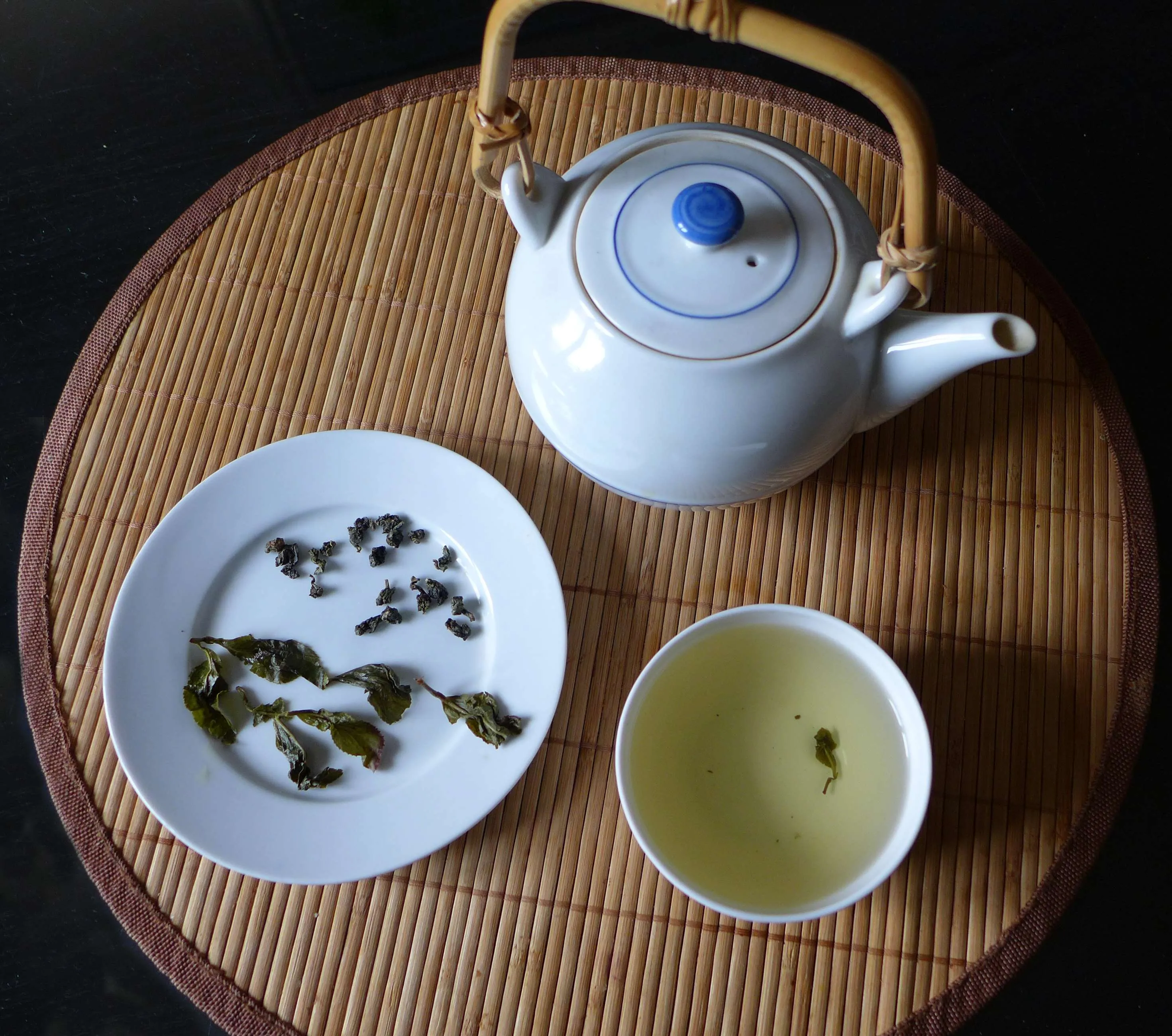
Semi-ball pellets progressively wet, absorb water and open. Temperature influences extraction rate, aroma release and sensory balance. Opening should not be explained as water’s kinetic energy breaking through a dried pectin barrier. The following household gongfu settings are separate from formal assessment and laboratory extraction protocols.
Comparing dry and infused leaves helps show how tightly rolled tea opens in water. Liquor colour also depends on dose and infusion conditions. The sample below is not the same batch as the dry tea above.
5.1 Control the vessel and record conditions
- Porcelain helps comparison: A gaiwan makes opening and drainage visible. Clay pots are also usable, but heat retention depends on size, wall thickness, preheating and surroundings; a material name cannot guarantee a constant 92–96 °C.
- Preheating reduces the initial temperature drop: Keep vessel and drainage consistent when comparing temperatures. The teapot-material study found composition differences under its conditions, not that clay is universally better or boiling water mandatory[7].
- Leave expansion space: Calculate ratios using actual water added. Record dry-leaf mass, water volume, starting water temperature and each infusion time.
5.2 Adjustable starting settings
- Leaf-to-water ratio: Try 1:20–1:25, such as 6–7 g for about 150 mL actual water. Reduce the dose for a lighter cup; shortening time alone may not adequately compensate for excessive leaf.
- Water temperature: For a tight, clearly roasted sample, start around 95–100 °C. For lighter firing, floral emphasis or reduced bitterness, try 85–95 °C with adjusted timing. Water at 80–90 °C is not forbidden; lower temperatures generally require reconsidering steep duration. These are practical trials, not universal optima.
- Pouring and an optional rinse: Pour steadily along the wall or at one point; high pouring need not “break through” pellets. A short rinse is optional and cannot replace quality testing.
- First three cups: Try 20–25 s, watching aroma, strength and opening. The second or third cup may need less time as opened leaves release compounds more readily.
- Middle cups: 30–45 s is another trial range, adjusted to concentration and lingering bitterness or astringency. Darker colour is not proof of improvement or a fixed sensory peak.
- Later cups: Try 60–90 s as flavour weakens; stop when watery or unenjoyable. Some samples reach seven or even ten infusions with high leaf doses and short steeps, but counts vary with material, water, vessel and preference. No number guarantees undiminished flavour.
5.3 A simple temperature comparison
Use the same sample, dose, water and preheated porcelain vessels. Compare 90 °C with near-boiling water at equal infusion times, noting aroma, bitterness, astringency and strength. Then adjust time toward similar strength and compare again. This helps distinguish extraction speed from preferred balance, while remaining a tasting exercise rather than a laboratory experiment controlling leaf temperature and every variable.
6. Common Myths & Scientific Clarifications
Myth 1: ‘Must authentic Dong Ding oolong be roasted exclusively over longan charcoal, and is electric roasting inherently inferior?’
Scientific Clarification: Roasting style and heat-source identity are separate questions. Traditional medium-to-heavy roasted styles coexist alongside lighter-fired expressions. While charcoal firing relies on ash banking, turning, and resting to modulate radiative and convective heat, modern electric roasters can precisely regulate temperature curves, duration, load depth, and airflow. Neither heat source guarantees quality on its own, and GB/T 39563-2020 (Taiwan style Oolong tea) does not mandate longan charcoal as an exclusivity requirement[1][4].
Myth 2: ‘Does a tighter, heavier semi-ball pellet prove higher pectin content and guaranteed steeping endurance?’
Scientific Clarification: Semi-ball pellets result from the coordinated interplay of moisture loss, thermal softening, initial rolling, and repeated cloth-bag compression[8]. While pellet tightness influences wetting and unfolding rates in early infusions, pellet density varies with leaf maturity, mechanical force, and stylistic targets. It cannot be reduced to a single ‘pectin adhesive’ metric, nor does tighter compression automatically guarantee more infusions[1][8].
Myth 3: ‘Does heavier roasting always convert bitterness into sweet throat resonance?’
Scientific Clarification: Comparative roasting studies on Qingxin oolong observe reductions in certain flavanols and phenolic acids alongside increases in Maillard pyrazines that contribute caramel and roasted notes[3][4]. However, excessive roasting can strip floral-fruity volatiles and introduce acrid or char bitterness. Taste recombination experiments demonstrate that Dong Ding’s palate structure arises from a multi-compound synergy—including caffeine, flavonol glycosides, gallic acid, and quinic acid—rather than a one-way increase in firing intensity[2][4].
Related Articles
- Mechanical Stress Signaling in Oolong Shaking — Moisture redistribution and aroma biosynthesis during alternating bruising and rest
- The Chemistry of Roasting: Maillard & Caramelization — Pyrazine formation and thermal phenolic transformations
- Famous Tea Craft: Anxi Tieguanyin — Southern Fujian cloth-ball rolling mechanics and orchid aroma chemistry
- Famous Tea Craft: Taiwan High-Mountain Oolong — Lightly oxidized, lightly fired high-elevation semi-ball oolong comparison
- Famous Tea Craft: Wuyi Rock Tea — Northern Fujian strip-style oolong and slow charcoal roasting kinetics
- Teaware Materials & Thermodynamics — How porcelain gaiwans and clay teapots shape oolong extraction and aroma
References
- R-334 State Administration for Market Regulation, & Standardization Administration of China. (2020). Taiwan style Oolong tea (National Standard GB/T 39563-2020). Standards Press of China. https://openstd.samr.gov.cn/bzgk/std/newGbInfo?hcno=A60DC75862947B51B76CF9C5630FBD6D
- R-372 Yu, Y., Liu, R., Wang, H., Blank, I., Xu, Y.-Q., Liu, J., Zhu, Y., Liu, Z., Ni, L., Sun, D., Huang, J. A., Fan, Y., Liu, Y., & Feng, X. (2025). Identification of Key Taste-Active Compounds in Oolong Teas (Dongding and Rougui) by Quantitative Measurements, Recombination Experiments, and Omission Tests. Journal of Agricultural and Food Chemistry, 73(33), 21082–21095. https://doi.org/10.1021/acs.jafc.5c06990
- R-373 Wang, D., Wang, C., Su, W., Lin, C.-C., Liu, W., Liu, Y., Ni, L., & Liu, Z. (2023). Characterization of the Key Aroma Compounds in Dong Ding Oolong Tea by Application of the Sensomics Approach. Foods, 12(17), 3158. https://doi.org/10.3390/foods12173158
- R-374 Lan, X., Liu, Z., Wang, D., Zhan, S., Chen, W., Su, W., Sun, Y., & Ni, L. (2022). Characterization of volatile composition, aroma-active compounds and phenolic profile of Qingxin oolong tea with different roasting degrees. Food Bioscience, 50, 101985. https://doi.org/10.1016/j.fbio.2022.101985
- R-375 Feng, X.-X., Wang, H., Yu, Y., Zhu, Y.-W., Ma, J., Liu, Z.-B., Ni, L., Lin, C.-C., Wang, K., & Liu, Y. (2024). Exploration of the flavor diversity of oolong teas: A comprehensive analysis using metabolomics, quantification techniques, and sensory evaluation. Food Research International, 195, 114868. https://doi.org/10.1016/j.foodres.2024.114868
- R-235 Ho, C.-T., Zheng, X., & Li, S. (2015). Tea aroma formation. Food Science and Human Wellness, 4(1), 9–27. https://doi.org/10.1016/j.fshw.2015.04.001
- R-296 Liao, Z. H., Chen, Y. J., Tzen, J. T. C., et al. (2018). Effect of teapot materials on the chemical composition of oolong tea infusions. Journal of the Science of Food and Agriculture, 98(2), 751–757. https://doi.org/10.1002/jsfa.8522
- R-031 Shi, Z., & Xia, T. (Eds.). (2016). Tea Processing (3rd ed.). China Agriculture Press. ISBN: 978-7109214347.
Article Knowledge Network
Explore the connections between the teas, processes and flavours in this article.