
Start with the essentials
Kenyan tea often reaches tea bags and black-tea blends as small particles that infuse quickly and build strength readily. Equatorial highland gardens connect with harvesting, central processing and international trade to supply everyday cups.
This article moves from regions and climate to CTC manufacture, smallholder organisation and Mombasa auctions. It also separates particle form and grades from tasting, offering a way to understand a sample beyond its country’s export role.
Three key points
- Equatorial highlands provide the settingLatitude, elevation and rain interact, with differences across regions and months.
- CTC creates particle formTissue disruption and contact area affect extraction and suitable strength.
- Organisation links gardens with marketsGrowers, factories and auctions help gather, process and distribute tea.
Connect the region with the tea
Inspect particle size and package information, then begin with a short infusion and compare plain drinking with milk if appropriate. Record origin, form and preparation alongside the sample’s sensations.
Why Kenyan tea is distinctive
Kenyan tea’s distinctiveness begins with geography. The equator crosses the middle of the country, and tea gardens are mainly found between 1 500 and 2 700 m above sea level[2]. Two climatic advantages stand out:
- Year-round plucking: Near the equator there are no sharp seasonal shifts; the bush grows steadily, and staggered rains across different altitudes allow continuous harvesting. Annual rainfall in the main tea districts is 1 200–2 000 mm, concentrated in the long rains (March–May) and short rains (October–December)[2].
- High-altitude UV and diurnal temperature variation: Strong UV radiation at altitude, combined with day–night temperature swings of 10–15 °C, stresses the plant into accumulating more polyphenols and amino acids, laying the chemical foundation for both strength and briskness in the cup[3].
In addition, Kenya’s tea industry is highly organised. The Kenya Tea Development Agency (KTDA) oversees roughly 600 000 smallholder farmers, providing a cooperative framework for unified processing and auction sale, which guarantees standardisation and traceability[4].
A brief history: from colonial introduction to indigenous rise
Colonial origins (1903–1963)
Tea cultivation in Kenya began in 1903, when British settlers brought Camellia sinensis var. assamica from India and trialled it on the highlands near Nairobi[5]. Early estates were European-owned plantations, and all leaf was exported to Britain. After the CTC process was invented in India in the 1930s, it was quickly adopted in Kenya, laying the technical foundation for the country’s broken-tea industry[6].
Indigenisation and post-independence growth (1963–2000)
Following independence in 1963, the government carried out land reform and redistributed some estates to local farmers. The Kenya Tea Development Agency (KTDA) was established in 1964 to organise smallholders into cooperatives, offering credit, extension services and factory management[4]. This institutional innovation grew the number of tea farmers from a few thousand at independence to roughly 600 000 today, and the planted area from about 40 000 ha to over 200 000 ha[1].
Globalisation and the auction system (2000–present)
Most Kenyan tea is traded through the Mombasa Tea Auction, one of the world’s largest black-tea auction centres. Sales are held every Tuesday, attracting buyers from the UK, Pakistan, Egypt, Afghanistan and elsewhere[7]. The auction is prized for transparent price discovery and prompt delivery. In 2023 Kenya exported roughly 520 000 tonnes of tea, accounting for about 22 % of global black-tea trade[1].
Geography and climate advantages
The equatorial-highland combination
Kenya Equatorial Highland Terroir & Bimodal Rainfall Console
Adjust "Harvest Month (Monsoon & Seasonality)" and "Elevation (1,500–2,700 m)" to explore how equatorial frost-free climate powers 365-day plucking, alongside the rapid 24-hour green-leaf-to-CTC processing kinetics.
About this diagram & its limits
Kenya Great Rift Valley terroir and CTC industrial chain illustration · Illustrates equatorial volcanic terroir, year-round plucking, and 24h CTC industrial kinetics shaping bright liquor and high briskness; monthly output shifts with monsoon rains.
Hydrometeorology & Theaflavins Synthesis
World-renowned core tea belt, massive theaflavins and golden ring
Kenyan tea gardens lie between roughly 4°S and 1°N. The main districts are:
| District | Elevation | Annual rainfall | Key characteristics |
|---|---|---|---|
| Kericho | 1 700–2 200 m | 1 800–2 000 mm | High altitude, wide diurnal range, bright and brisk liquor |
| Murang’a | 1 500–2 100 m | 1 200–1 600 mm | Central highlands, rain-concentrated, high volume |
| Kisii Highlands | 1 500–2 100 m | 1 500–1 800 mm | Volcanic soils, rich minerals, strong cup |
| Embu | 1 600–2 400 m | 1 200–1 500 mm | Eastern slopes, long plucking season, stable quality |
Values are representative ranges; actual conditions vary with micro-climate and year[2].
UV radiation and polyphenol accumulation
At high altitude the atmosphere is thinner, so UV (especially UV-B) intensity is greater. Research shows that UV stress activates the phenylpropanoid pathway in tea, promoting synthesis of catechins and other flavonoids[3]. Kenyan highland teas therefore tend to carry higher total catechin levels than lowland teas, providing ample substrate for the formation of theaflavins during CTC manufacture — the very compounds that give black tea its bright colour and brisk taste[6].
Diurnal temperature variation and amino acids
Wide day–night temperature swings reduce respiratory losses at night, allowing the carbohydrates and amino acids accumulated by day to be retained. High-elevation gardens therefore show relatively higher theanine and free amino acid contents, which helps explain why Kenyan highland black teas can be both strong and brisk rather than merely astringent[3].
Major producing districts in detail
Kericho
Kericho lies on the western side of the Great Rift Valley and is Kenya’s most celebrated tea district, as well as an important source of leaf for Unilever’s Lipton brand. Elevation is 1 700–2 200 m, rainfall 1 800–2 000 mm, and the soils are mainly well-drained volcanic ash rich in minerals[2].
Kericho teas are prized for a bright liquor and brisk character, making them ideal for premium blends and plain-drinking black tea. The cooler temperatures at this altitude (annual mean 15–18 °C) slow bush growth and allow more thorough internal compound accumulation.
Murang’a
Murang’a is in Kenya’s central highlands, close to Nairobi, and is one of the most densely cooperative-organised districts under KTDA. Elevation 1 500–2 100 m, rainfall 1 200–1 600 mm, concentrated in the long and short rainy seasons[2].
Murang’a produces large volumes at competitive cost. Its style is slightly heavier than Kericho, with a red, full-bodied liquor well suited to milk tea and mass-market blends.
Kisii Highlands
The Kisii Highlands are in south-western Kenya near Lake Victoria. Volcanic soils are fertile and rich in potassium and phosphorus. Elevation 1 500–2 100 m, rainfall 1 500–1 800 mm[2].
Kisii teas are marked by high strength and rich polyphenol content, making them a favourite base for blends that need a pronounced “tea” backbone.
Embu
Embu is on the eastern slopes of Mount Kenya. At 1 600–2 400 m it is one of the highest tea districts in the country. Because the terrain rises from east to west, rainfall is distributed more evenly, giving a long plucking season and small year-to-year quality variation[2].
Embu tea is valued for consistency; prices at the Mombasa auction fluctuate less than those of other districts, which makes it attractive to bulk buyers.
Plucking and CTC manufacture
Plucking standard
24-Hour Continuous CTC Fast-Track & Golden-Ring Cup Quality
Adjust "Harvest Month (Monsoon & Seasonality)" and "Elevation (1,500–2,700 m)" to explore how equatorial frost-free climate powers 365-day plucking, alongside the rapid 24-hour green-leaf-to-CTC processing kinetics.
About this diagram & its limits
Kenya Great Rift Valley terroir and CTC industrial chain illustration · Illustrates equatorial volcanic terroir, year-round plucking, and 24h CTC industrial kinetics shaping bright liquor and high briskness; monthly output shifts with monsoon rains.
Brightness & Briskness Indicators 与 KTDA Integrated High-Speed Processing Loop
The dashboard above shows Kenya’s CTC black tea “output / export / flavour” console. Drag the month slider to see how Kenya’s equatorial location enables year-round plucking, and how rainfall, temperature and plucking intensity affect cup concentration. Adjust the altitude bar to compare the flavour differences between high-elevation districts such as Kericho and lower-elevation areas.
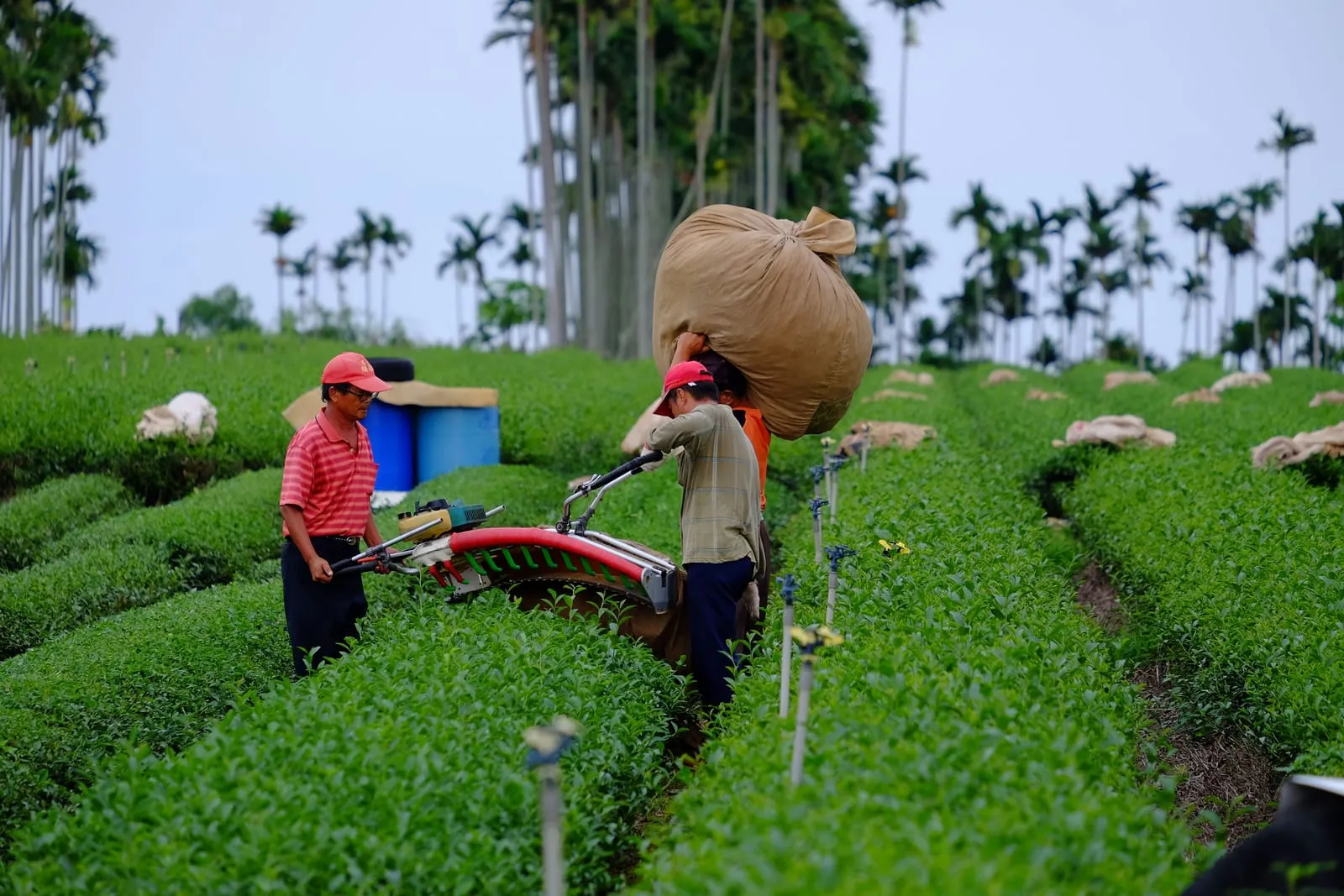
Kenyan black tea is mainly plucked as two leaves and a bud, with some premium lots using one leaf and a bud. Because plucking is continuous, Kenya does not have the strict “pre-Qingming” or “pre-Grain Rain” concepts of Chinese tea culture, but quality still varies with the rains: flush growth is rapid and leaves are thinner during the rainy seasons, while the drier months give thicker, more concentrated leaf[4].
CTC process parameters
Almost all Kenyan tea is manufactured by the CTC (Crush-Tear-Curl) method, characterised by high-speed mechanical cutting, very high cell breakage, and rapid, even oxidation. Typical parameters are[6][8]:
| Stage | Temperature | Time | Main purpose |
|---|---|---|---|
| Withering | Ambient or controlled, 20–30 °C | 12–18 h | Reduce moisture to 60–65 %, soften leaf |
| CTC cutting | Frictional heat, room temperature | Seconds to a few minutes | >90 % cell breakage, create oxidation surface |
| Oxidation | 20–28 °C, RH ≥95 % | 30–120 min | Enzymatic oxidation: catechins → theaflavins → thearubigins |
| Drying | 90–120 °C | 20–40 min | Terminate enzymes, fix quality, moisture to 3–5 % |
Values are representative ranges; actual settings depend on leaf condition, equipment and target grade[6][8].
How CTC accelerates oxidation
CTC machines use toothed rollers to shred withered leaf, achieving cell breakage rates above 90 %. The more thoroughly cells are ruptured, the more fully polyphenol oxidase (PPO) and catechins — normally separated by membranes — can meet, and the faster oxygen can diffuse, accelerating oxidation exponentially[6].
Research shows that theaflavin formation after CTC cutting is markedly faster than after traditional rolling: theaflavins peak at roughly 20–30 minutes of oxidation, then convert to thearubigins and theabrownins[6]. Kenyan CTC teas are usually engineered for relatively high theaflavin levels (1.5–3.5 %), which secures the bright colour and brisk taste prized at auction[8].
Oxidation time and the theaflavin / thearubigin ratio
Oxidation duration is critical. Too short (less than 30 min) and catechins oxidise incompletely, leaving the liquor pale and green-astringent; too long (more than 120 min) and theaflavins over-convert to thearubigins and theabrownins, darkening the liquor and flattening the taste[6].
| Oxidation time | Theaflavin tendency | Liquor colour | Taste |
|---|---|---|---|
| 30–60 min | Higher, bright and brisk | Bright red | Brisk and strong |
| 60–90 min | Moderate, balanced | Rich red | Strong and mellow |
| 90–120 min | Lower, shifting to thearubigins | Dull reddish-brown | Mellow but less brisk |
Values are representative ranges; actual results depend on temperature, humidity and leaf polyphenol content[6][8].
Global market position
Second-largest exporter
According to the Kenya Tea Board and ITC trade data, Kenya consistently ranks second in global tea exports (after China) but first in black-tea exports[1]. In 2023 tea export earnings were roughly USD 1.3 billion; main markets are Pakistan (~35 %), Egypt (~20 %), the UK (~10 %) and Afghanistan (~8 %)[7].
The Mombasa auction system
The Mombasa Tea Auction is one of the global benchmarks for black-tea pricing. Held every Tuesday, it uses an open outcry system: buyers bid in the room, and the highest bidder wins each lot[7]. The auction offers three advantages:
- Price transparency: every transaction price is published in real time, reducing information asymmetry;
- Quality standardisation: each lot is graded and sensorially assessed by professional tea tasters before sale;
- Prompt settlement: payment and delivery are normally completed within 7–14 days, ensuring rapid capital turnover.
Smallholder cooperative model
The KTDA-managed cooperative system is the organisational backbone of Kenyan tea. Smallholders deliver green leaf to a nearby factory owned by their cooperative; KTDA provides technical and management support. Processed tea is sent to Mombasa for auction, and proceeds — minus factory costs — are returned to the farmers[4]. Incomes per farmer are modest but stable, and risks are spread across the cooperative.
Flavour and quality formation
Typical flavour markers of Kenyan CTC black tea:
- Bright: a vivid, clear red liquor, driven by high theaflavin content;
- Brisk: a strong yet lively, almost “sparkling” astringency, produced by the combination of theaflavins and caffeine;
- Cooling note: a faint mint-like freshness found in some high-elevation lots (especially Kericho), linked to volatile terpenoids;
- Malty sweetness: a sweet, malty undertone from Maillard and caramelisation reactions during drying.
Kenya CTC Black Tea · Flavour Profile
The profile is schematic; actual values vary with district, elevation, season and processing parameters.
Common misconceptions
- “Kenyan tea is all cheap blending material”: While much Kenyan CTC is exported for blending, premium single-origin lots from high-elevation districts such as Kericho and Embu are perfectly suited to plain drinking, and their brightness and briskness can surpass some Indian Assam teas.
- “CTC processing requires no skill”: Withering degree, roller pressure, oxidation temperature / humidity and drying temperature must all be tightly controlled. Any deviation can leave theaflavins too low or theabrownins too high, directly affecting auction prices.
- “Kenyan tea tastes the same all year”: Although plucking is continuous, the rainy seasons (March–May and October–December) bring rapid, tender growth with thinner, more dilute leaf, while the drier months (June–September and January–February) yield thicker, more concentrated leaf. At auction, dry-season teas usually command a 5–15 % premium.
- “Kenyan tea is all Assamica”: The early plantings were indeed var. assamica, but in recent years Chinese small-leaf (var. sinensis) hybrid cultivars have been introduced to improve aroma complexity and taste layering.
See also
- Congou vs. CTC Black Tea — detailed comparison of CTC and traditional orthodox manufacture
- The Science of Black Tea Oxidation — enzymatic mechanisms of theaflavin and thearubigin formation
- The World Tea Map — Kenya’s place in the global tea belt
- China’s Four Great Tea Regions — contrasting the seasonality of Chinese tea zones with Kenya’s year-round harvest
Parameter quick-reference
| Parameter | Representative range | Notes |
|---|---|---|
| Elevation | 1 500–2 700 m | Higher altitude = more polyphenols and amino acids |
| Annual rainfall | 1 200–2 000 mm | Concentrated in rainy seasons; well-drained volcanic soil essential |
| Temperature | 10–28 °C | Diurnal swing 10–15 °C, favourable for compound retention |
| Oxidation time | 30–120 min | Theaflavin peak ~20–30 min, then conversion to thearubigins |
| Drying temperature | 90–120 °C | High-heat quick drying locks enzymes and preserves theaflavins |
| Theaflavin content | 1.5–3.5 % | Determines liquor brightness and briskness |
| Finished moisture | 3–5 % | Lower than China’s national standard (≤8.5 %), suited to long sea voyages |
Values are representative ranges; actual figures vary by district, season, factory equipment and target grade[2][6][8].
References
- R-153 — Kenya Tea Board. Kenya Tea Industry Performance Report 2023.
- R-154 — Ojwang, J. O., et al. (2017). Climatic influence on tea quality in Kenya. Journal of Agricultural Science.
- R-155 — Ahmed, S., et al. (2019). Effects of climate change on tea production in Kenya. Climate Risk Management.
- R-156 — Kenya Tea Development Agency (KTDA). Smallholder Tea Farming in Kenya: Cooperative Model and Sustainability. 2022.
- R-157 — Mathews, J. A. (1953). The History of Tea in Kenya. East African Agricultural Journal.
- R-062 — Deka, H., Sarmah, P. P., Devi, A., Tamuly, P., & Karak, T. (2021). Changes in major catechins, caffeine, and antioxidant activity during CTC processing of black tea from North East India. RSC Advances, 11, 11457–11467. https://doi.org/10.1039/d0ra09529j
- R-158 — International Trade Centre (ITC). Trade Map: Kenya Tea Exports 2023.
- R-159 — Wright, L. P., et al. (2020). UV-B radiation and secondary metabolite accumulation in Camellia sinensis. Plant Physiology and Biochemistry.
Article Knowledge Network
Explore the connections between the teas, processes and flavours in this article.