
Start with the essentials
Picked as one bud with one or two leaves, Bai Mudan sits between bud-only Silver Needle and mature-leaf Shoumei. Because open blades transpire faster than the downy bud while the stem buffers moisture transfer, withering becomes a delicate water-redistribution step.
This guide walks through bud-vs-leaf moisture dynamics, airflow and warm-air trials separating grassy alcohols from floral volatiles, and how Fuding’s solar-led drying and Zhenghe’s extended shaded racks diverge within Fujian white tea.
Three key points
- Buds and open blades dehydrate at different speedsleaves wilt first as the tender stem slows bud drying, pacing gentle oxidation and amino-acid accumulation.
- Airflow and heat act as a two-sided leverstagnant air traps green C6 alcohols while excessive wind stresses tissue; balanced flow promotes linalool and nerol.
- Fuding and Zhenghe differ across cultivar traits and withering schedulesregional styles overlap in practice and evolve further along storage stereochemistry.
What to notice when tasting
Steep a fresh Fuding Bai Mudan alongside a Zhenghe example with matched leaf ratio, temperature, and timing. Compare bud-to-leaf contrast in the wet leaf and trace how fresh floral lift compares with rounder herbal sweetness.
If Silver Needle captures the tight delicacy of pure spring buds and Shoumei expresses the hearty warmth of older leaves, Bai Mudan (“White Peony”) occupies white tea’s central balance[1]. Examine dry Bai Mudan closely and you see plump, silver-downy buds nestled inside curled sage-green to deep olive blades—tea makers call this silver-core-in-green-leaves structure “green foliage framing a silver heart.” Carrying both thick tender buds and open blades on the same bamboo tray makes dehydration kinetics notably more complex than in single buds.
1. Raw Material, Regional Standards & Cultivar Roots
1.1 National Taxonomy vs. Fuding and Zhenghe GI Boundaries
Under China’s national standard GB/T 22291-2017 White tea, Bai Mudan is crafted predominantly from fresh shoots of one bud with one or two leaves harvested from white-tea cultivars and produced through withering and gentle drying without pan-fixation or rolling[1]. National grading distinguishes leaf tenderness, moisture safety limits, and physical appearance, without dictating a single sun-versus-shade ratio[1].
Within Fujian province, geographical indication frameworks preserve two long-standing traditions: coastal hill Fuding White Tea (DB35/T 1076-2010)[2] and inland mountain Zhenghe White Tea (GB/T 22109-2008, alongside the newly issued revision GB/T 22109-2026 taking effect on April 1, 2027)[3]. Both GI specifications define regional origin boundaries, accepted cultivar lineages, and baseline quality limits—identifying provenance rather than declaring one region inherently superior[2][3].
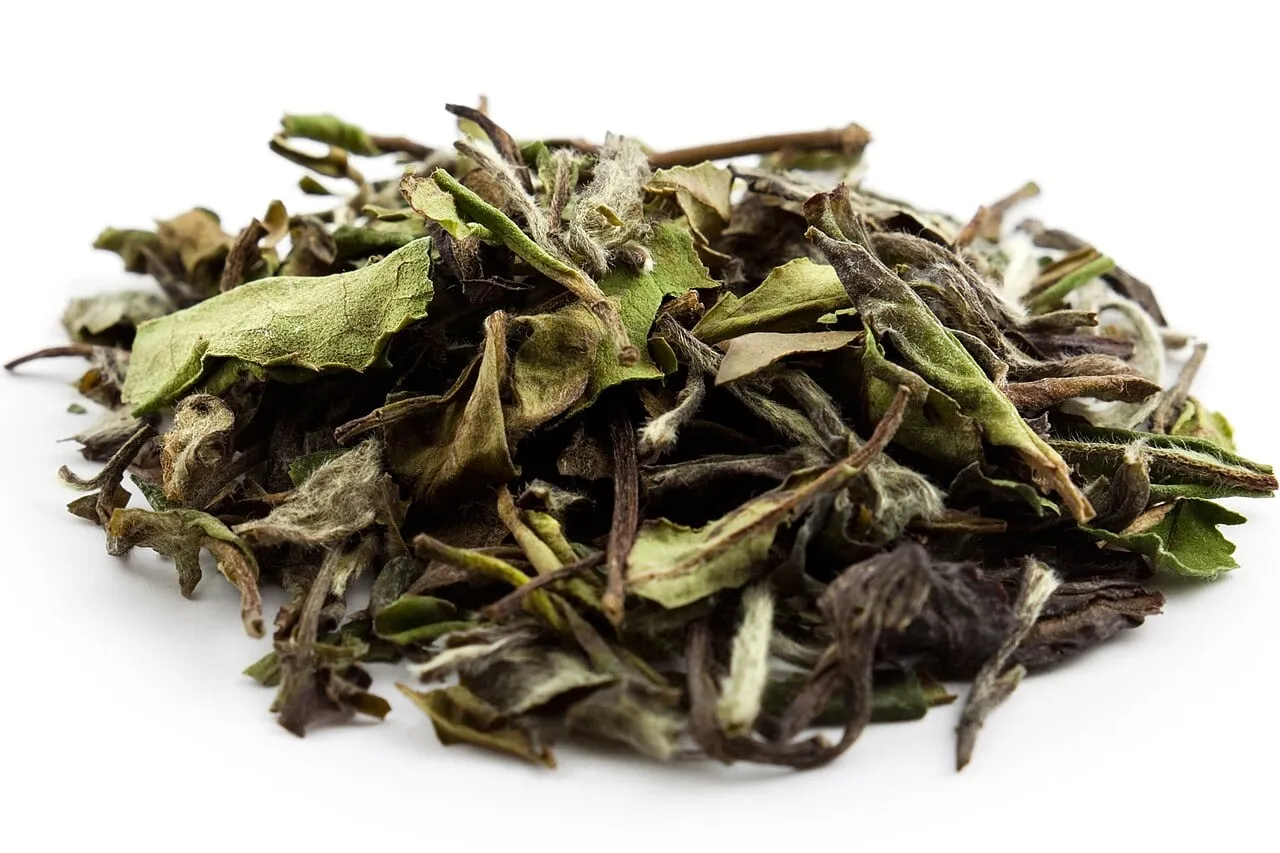
1.2 Cultivar Genetics: Fuding Dabai/Dahao vs. Zhenghe Dabaicha
Before leaves even reach the withering rack, genetics lay down different precursor baselines:
- Fuding-led clones: Primarily Fuding Dabaicha and Fuding Dahaocha, famous for thick spring buds clothed in dense white trichomes and early spring flushing.
- Zhenghe-led clones: Traditionally built around Zhenghe Dabaicha—featuring broader, thicker blades and slightly later budbreak—alongside adapted Fuan Dabaicha clonal selections[3][5].
In a comparative study of Bai Mudan processed from three major Fujian cultivars (Zhenghe Dabaicha ZHDB, Fuan Dabaicha FADB, and Fuding Dahaocha FDDH), integrated GC-MS, LC-MS, and quantitative descriptive analysis identified theanine, glutamic acid, asparagine, and serine as principal Taste Activity Value (TAV) drivers of umami (especially prominent in the tested ZHDB and FADB groups), while sucrose, serine, and asparagine accounted for sweetness variation. Odor Activity Value (OAV) profiling flagged 22 critical volatiles—led by floral methyl salicylate, linalool, and β-ionone, sweet-fruity β-ocimene, benzaldehyde, and geraniol, balanced against fresh grassy (Z)-3-hexenol[5].
A companion non-targeted metabolomics analysis of 12 Fujian white tea samples across 4 cultivars and 3 grades further showed that as plucking grade shifts downward toward leafier shoots, catechins and amino acids decline while flavonol glycosides and gallic acid rise—increasing astringency while softening umami. Across those tested batches, Fuding Dabai and Fuding Dahao clustered toward floral-fruity volatiles whereas Fuan Dabai and Zhenghe Dabai leaned toward herbal and aged notes[6]. Such sample-specific findings clarify cultivar tendencies without fixing immutable labels on every farm harvest.
2. Core Manufacturing & Two-Part Dehydration Physics
Under technical specification GB/T 32743-2016 and traditional Fujian workshops, white tea undergoes minimal handling across four broad steps, compressing almost all flavor formation into a 36–72 hour dehydration window[4][10].
2.1 Why Leaves, Stems, and Buds Dehydrate at Different Speeds
Why does spreading whole shoots dry into sweet Bai Mudan rather than sharp green tea or malty black tea? The answer lies in structural hydrology.
Expanded first and second leaves expose far larger stomatal surface areas than the tightly folded downy bud. As ambient moisture drops, open blades wilt first and turn flexible. Meanwhile, the tender connecting petiole and stem act as a hydrated buffer conduit, gradually feeding lingering internal water forward toward the bud and blade margins[7][10].
Because makers avoid rolling or high-heat fixation during withering, cell membranes are never violently ruptured. Instead, gradual water-stress permeability lets polyphenol oxidase (PPO) encounter catechins slowly while protein hydrolysis feeds sweet free amino acids and chlorophyll gently fades without stewing[7][10].
Bud-Leaf Moisture Transfer & Airflow Balance
Stage 01: stem-to-bud water flow; Stage 02: airflow & temperature regimes.
Leaves dry first; the stem slowly feeds the bud
- Dense white down shields the central bud
- Broader leaf blades transpire moisture faster
- Tender stem acts as a conduit & water buffer
- Close-up: gentle permeability shift without bruising
Keeping the shoot intact lets stem water buffer the bud while blades turn soft.
Conditions, handling & standards
- Environment
- Ambient sun/shade window, ~22–28 °C
- Timing
- First 12–24 h water-redistribution phase
- Moisture
- ~75–78% → 50–55%
- Leaf state
- Blades wilt and fold first; stem gradually feeds the bud
Bai Mudan shoots combine one bud with one or two leaves whose surfaces lose water unevenly. The tender stem buffers bud hydration, supporting gradual proteolysis and gentle oxidation.
Thin, undisturbed spreading without pan-firing or rolling to keep cuticles intact
Reference standards: GB/T 22291-2017 (White Tea), DB35/T 1076-2010 (Fuding GI), and GB/T 22109-2026 (Zhenghe GI, effective 2027-04-01 superseding GB/T 22109-2008).
Shown conditions are representative craft examples or controlled study settings; actual workshops vary timing dynamically with ambient humidity, sunshine, and cultivar thickness.
2.2 Airflow and Temperature-Changing Regimes: Controlled Evidence
Experienced masters adjust tray spacing constantly to weather—avoiding damp green stagnation on rainy days and crisp edge-burn in fierce wind. Two recent experimental studies illuminate why air movement and thermal pacing behave as a double-edged tool:
- Airflow velocity balance: A 2025 study comparing 0 m/s (
AF0), 0.5 m/s (AF0.5), and 1.0 m/s (AF1) airflow using LF-NMR water-state imaging and electron microscopy found that stagnant air (AF0) stalled moisture migration from stems to leaves and trapped grassy (E)-2-hexen-1-ol and catechins; excessive flow (AF1) triggered rapid dehydration stress and elevated grassy 3-hexen-1-ol. ModerateAF0.5airflow smoothly steered water into bound states, supporting linalool, nerol, and amino-acid accumulation alongside clean slate-green coloration[7]. - Staged warm-air withering: A 2026 four-cultivar comparison contrasting 48 h natural withering against staged warm-air withering (24 h at ~25 °C / 65% RH → a 0.5 h pulse at ~55 °C → resuming ~25 °C) cataloged 176 volatiles and observed higher ketones, esters, and alkenes that lifted sweet-fruity notes while curbing raw grassiness[8]. Rather than prescribing one rigid factory curve, these experimental benchmarks demonstrate how controlled heat-and-flow pulses shift volatile balances in humid weather.
3. Fuding vs. Zhenghe Paths: Regional Craft Divergence
Tea circles often summarize Fujian practice as “Fuding dries in the sun; Zhenghe withers in the shade.” Reality is far less binary: Fuding workshops rely on heated indoor troughs during spring rain, and Zhenghe producers commonly use a short sunny finishing dry after indoor racks. Regional differences express contrasting climates and cultivar leaf thickness rather than incompatible ideologies[2][3][10].
Fuding vs. Zhenghe: Two Classical Bai Mudan Paths
Compare Stage 03 (Fuding solar-led) vs. Stage 04 (Zhenghe shaded indoor).
Sun-led or combined withering for brighter floral-fruity crispness
- Moderate spring sunshine gently warms spread shoots
- Spaced open shoots lose surface water steadily
- Vapor disperses upward from both downy sides
- Result: slate-grey leaves framing bright silver buds
Fuding shoots favor timely solar/combined drying to preserve lively floral-fruity notes.
Conditions, handling & standards
- Environment
- Spring gentle sunshine or warm ventilated room
- Timing
- Typically ~36–60 h depending on weather
- Moisture
- Steadier early drop → finished <10%
- Leaf state
- Sage-grey upper leaf with dense silver down underneath
Fuding Dabai and Dahao cultivars bear thick downy buds suited to solar-led or combined withering; comparative sample sets often group Fuding batches toward brighter floral-fruity notes.
Solar or combined withering with prompt moisture exit followed by gentle finishing bake
Reference standards: GB/T 22291-2017 (White Tea), DB35/T 1076-2010 (Fuding GI), and GB/T 22109-2026 (Zhenghe GI, effective 2027-04-01 superseding GB/T 22109-2008).
Shown conditions are representative craft examples or controlled study settings; actual workshops vary timing dynamically with ambient humidity, sunshine, and cultivar thickness.
| Feature | Common Fuding Path | Common Zhenghe Path | Context & Evidentiary Boundary |
|---|---|---|---|
| Primary Cultivars | Fuding Dabaicha, Fuding Dahaocha | Zhenghe Dabaicha (often alongside Fuan Dabaicha) | Overlapping plantings exist in both regions[2][3][5] |
| Typical Clear-Weather Rhythm | Solar-led or combined indoor/outdoor withering (~36–60 h example) | Prolonged indoor shaded rack drying (~48–72 h), late merging & brief solar finish | Both pivot to indoor airflow control during rainy springs[4][10] |
| Dry-Leaf Contrast | Plump downy buds framing slate-grey supple blades | Darker olive-black upper leaves around a sharp silver bud (“green blades hugging silver”) | Visual look also shifts markedly across commercial grades[1][6] |
| Fresh-Tea Aroma Focus | Crisp pekoe down and bright floral-fruity notes | Rounded herbal, hay-like warmth and smooth sweetness | Reflects both cultivar volatile profiles and slower indoor oxidation[6] |
| Storage EPSF Stereochemistry | Tested Fuding batches showed EGCG + theanine trending toward S-configuration EPSFs over aging | Tested Zhenghe samples favored R-configuration EPSF formation during storage | Documented in Chen et al. (2024) comparative white-tea sample panels[9] |
Comparisons above summarize representative regional tendencies and cited study cohorts; neither path automatically outranks the other in blind tasting.
4. Storage Evolution & Sensory Trajectory
Because intact dried cells carry non-denatured precursors—including free sugars, galloylated catechins (EGCG), amino acids, and low residual enzyme pockets—cleanly sealed, dry-stored Bai Mudan evolves differently from ultra-dense single buds or coarse mature leaves[9].
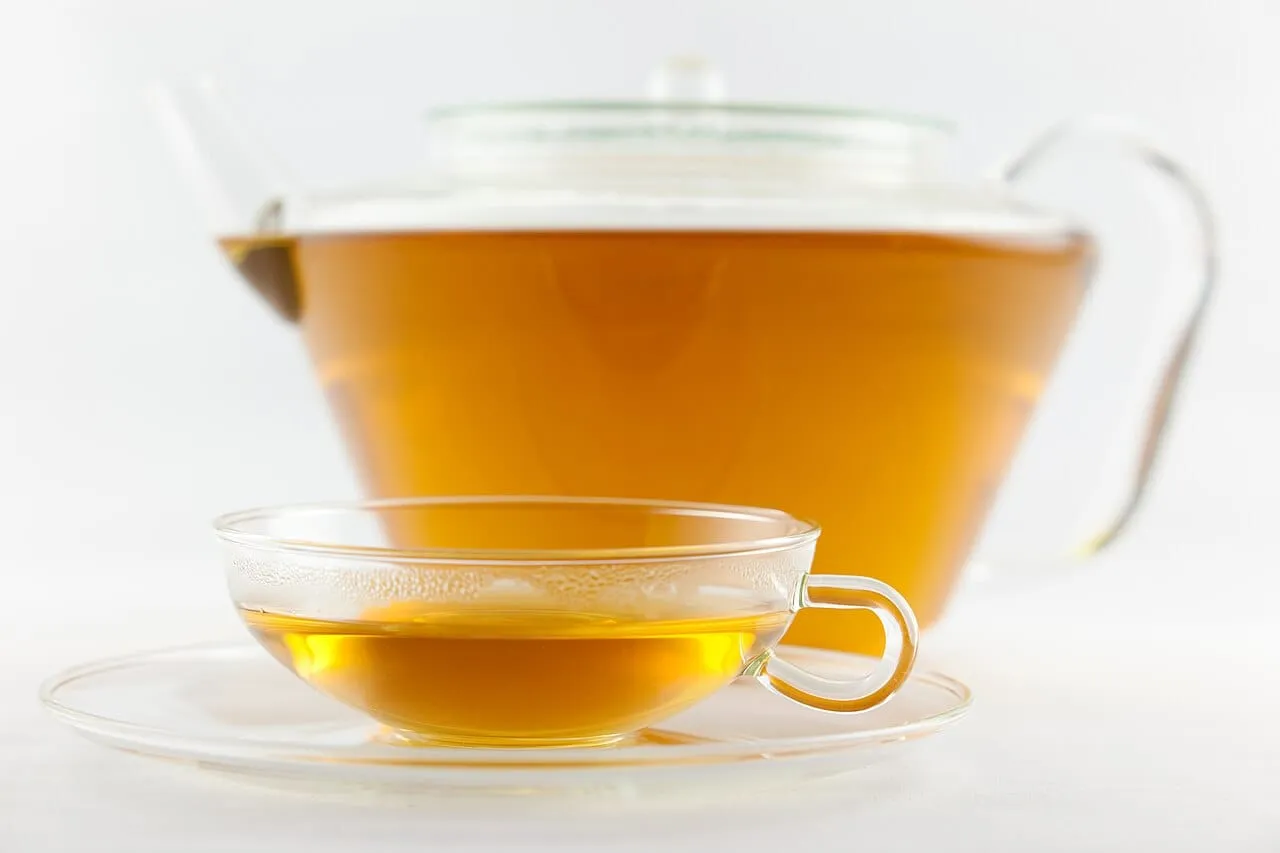
Bai Mudan (White Peony)
White · Bud + 1–2 Leaf Withered5. Adjustable Brewing Starting Points & Side-by-Side Practice
With tender buds and structured leaves sharing one vessel, Bai Mudan tolerates wider heat adjustments than fine green tea. Treat the baselines below as flexible starting points:
- Porcelain Gaiwan for Fresh Top-Grade Bai Mudan:
- Start with
4–5 gleaf per110–140 mLporcelain gaiwan (~1:25–1:30ratio); - Begin near
88–92 °C, pouring calmly down the inner wall. Decant infusion 1 at10–15 s, adding5–10 sgradually in later rounds—or raise water toward95 °Cif you want fuller sweetness earlier.
- Start with
- Aged or Compressed Bai Mudan (3+ Years Dry-Stored):
- Use near-boiling
95–100 °Cwater to hydrate thicker blades cleanly; hold early steeps15–20 suntil folded clusters relax. Once gongfu steeps soften after round five or six, gentle simmering in glass highlights pectin viscosity cleanly.
- Use near-boiling
- Home Tasting Contrast:
- Brew a fresh Fuding Bai Mudan side-by-side against a Zhenghe (or darker-leaf shade-withered) sample in identical gaiwans;
- Compare wet leaf bud-to-blade color contrast, separate brisk peach-blossom lift from mellow herbal depth on the lid, and note palate coating speed.
6. Common Myths & Scientific Clarifications
Myth 1: “Zhenghe white tea never touches sunlight, whereas Fuding white tea is purely sun-baked.”
Scientific Clarification: Both regions adapt dynamically to spring rain. Fuding relies heavily on heated ventilated troughs in damp weather, and Zhenghe makers finish indoor-withered batches outdoors or in gentle warm dryers when humidity rises[2][3][4].
Myth 2: “Tea as medicine: ‘1 year tea, 3 years medicine, 7 years treasure’ proves aged Bai Mudan cures illness.”
Scientific Clarification: Long-term metabolomics confirms real chemical change over clean storage—flavanols and free amino acids decrease while N-ethyl-2-pyrrolidone-substituted flavanols (
EPSFs) and nucleosides accumulate[9], explaining softer, sweeter drinking texture. Sensory comfort in food does not equal medical efficacy.
Myth 3: “Boiling water burns Bai Mudan and must strictly stay under 80 °C.”
Scientific Clarification: Open-leaf white tea cuticles tolerate higher heat cleanly so long as steep duration is controlled. Water around
88–95 °C(and near-boiling for aged batches) is an adjustable dial—not a forbidden zone.
Myth 4: “Higher bud ratio always guarantees a better tasting cup than leafier grades.”
Scientific Clarification: Standard grades weight bud tenderness and appearance, which studies align with higher amino acids and floral brightness[1][6]. Yet broader first and second leaves contribute soluble pectins, layered sweetness, and multi-steep stamina—making clean processing and balance more meaningful than bud percentage alone.
7. Related Articles
- Baihao Yinzhen (Silver Needle): Non-Fired Bud Craft & Withering Physics
- Aged Fuding White Tea: Pressed Shoumei & Storage Chemistry
- Science of White Tea Withering
- Composition and Flavour Science
References
- R-071 Standardization Technical Committee on Tea (SAC/TC339). GB/T 22291-2017 White tea. Beijing: Standards Press of China, 2017.
- R-072 Fujian Provincial Bureau of Quality and Technical Supervision. DB35/T 1076-2010 Product of Geographical Indication—Fuding White Tea. Fuzhou: Fujian Local Standards, 2010. https://qccdata.qichacha.com/Standard/StandardLocal/8d07abb9dc0b35f55d8a69730474353e.pdf
- R-419 State Administration for Market Regulation & Standardization Administration of China. GB/T 22109-2026 Quality Requirements for Product of Geographical Indication—Zhenghe White Tea (effective 2027-04-01, superseding GB/T 22109-2008). Beijing: Standards Press of China, 2026. https://openstd.samr.gov.cn/bzgk/std/newGbInfo?hcno=1AF9D2EAB74F3234A7CEACE6B7735421
- R-073 AQSIQ & SAC. GB/T 32743-2016 Technical Specification for White Tea Processing. Beijing: Standards Press of China, 2016. https://www.co-tea.com/mtsc/uploads/About/20220819112001340b0a2.pdf
- R-422 Zheng Y, Zhang Y, Zou Y, et al. Chemical Profiling and Sensory Analysis Reveal Quality Differentiation in Baimudan White Tea Processed from Three Major Fujian Tea Cultivars. Horticulturae, 2025, 11(10): 1196. https://doi.org/10.3390/horticulturae11101196
- R-212 Zong K, et al. Chemical Drivers of Flavor Variation Across Cultivars and Grades of Fujian White Tea Revealed by Integrated Volatile and Non-Volatile Metabolomics. Foods, 2026, 15(3): 458. https://doi.org/10.3390/foods15030458
- R-352 Wang J, Lin D, Feng J, et al. Airflow: A double-edged sword in shaping white tea quality. Food Chemistry: X, 2025, 28: 102558. https://doi.org/10.1016/j.fochx.2025.102558
- R-424 Huang F, Huang Y, Gong X, et al. Impact of Warm-Air Withering Methods on Aroma Quality of White Teas from Four Tea Cultivars. Foods, 2026, 15(12): 2120. https://doi.org/10.3390/foods15122120
- R-423 Chen Z, Dai W, Xiong M, et al. Metabolomics investigation of the chemical variations in white teas with different producing areas and storage durations. Food Chemistry: X, 2024, 21: 101127. https://doi.org/10.1016/j.fochx.2024.101127
- R-031 Shi ZP, Xia T (eds.). Tea Processing Science (3rd ed.). Beijing: China Agriculture Press, 2016.
Article Knowledge Network
Explore the connections between the teas, processes and flavours in this article.